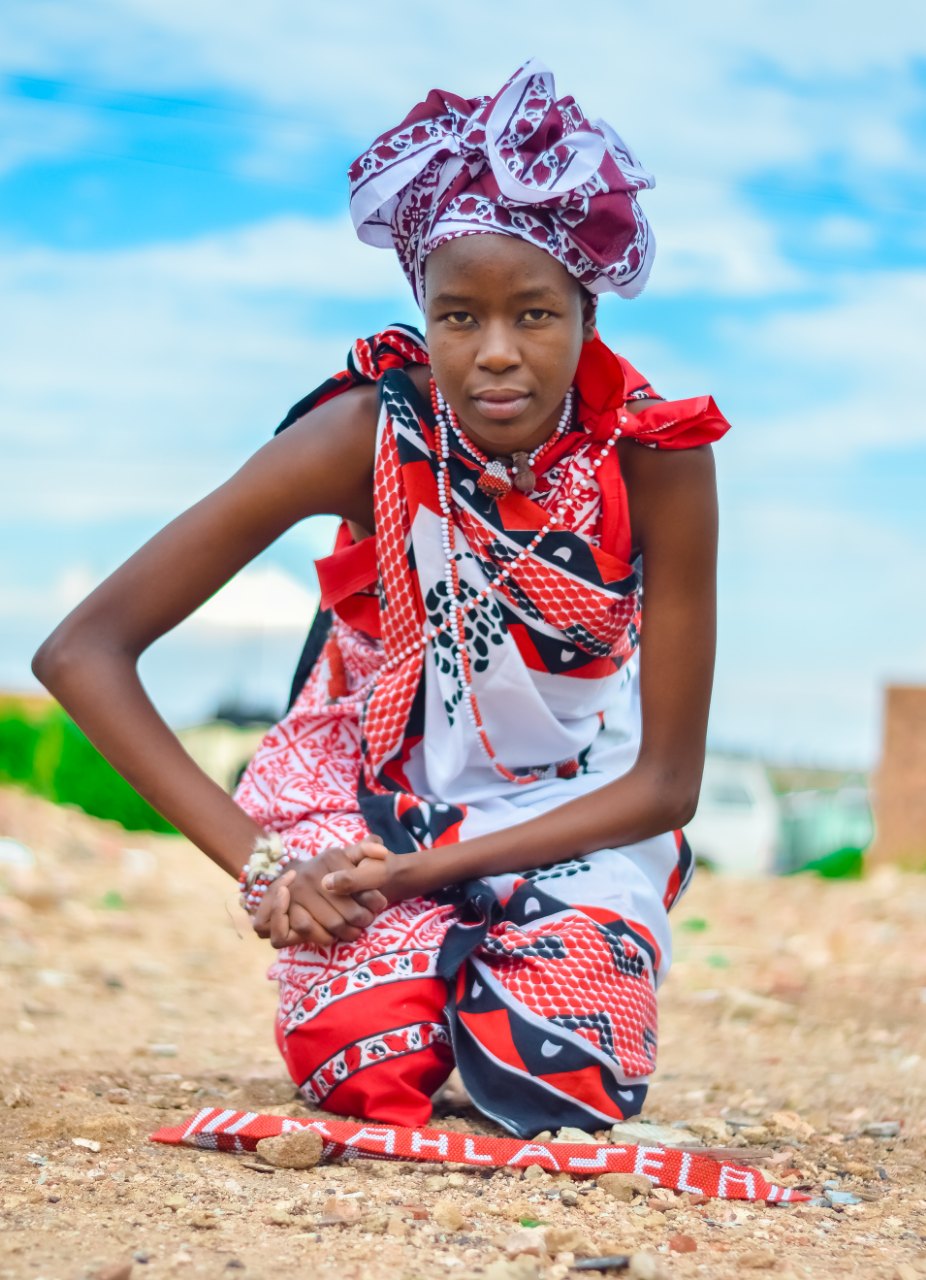

Every June, South Africa remembers the youth of 1976.
We commemorate courage. We honour sacrifice. We celebrate the determination of a generation that demanded a better future.
Yet one group of young South Africans remains largely absent from national conversations about youth development, employment, education, and economic participation.
Young Traditional Health Practitioners.
Many are quietly counted among South Africa’s NEET population – young people classified as being Not in Employment, Education, or Training.
That should concern all of us.
Not because these young people are inactive.
On the contrary, thousands participate in structured learning, apprenticeship, community service, cultural preservation, healing work, entrepreneurship, and the transmission of Indigenous Knowledge Systems. In doing so, they support families, strengthen communities, contribute to local economies, and preserve African heritage.
The challenge is not a lack of activity.
Instead, it is a lack of recognition.
Far too often, these forms of learning and participation fail to translate into recognised educational status, occupational mobility, skills development opportunities, funding mechanisms, or labour market access.
Put differently, many young Traditional Health Practitioners are not disconnected from learning.
They are disconnected from recognition.
And that distinction matters.
The contradiction hiding in plain sight
Over the past three decades, South Africa has made significant progress in recognising Traditional Health Practice.
The Constitution protects the freedom to choose a trade, occupation, or profession. The Traditional Health Practitioners Act establishes a legislative framework for regulation, while government policy increasingly acknowledges the role of Traditional Health Practitioners within healthcare delivery and the broader health system.
However, recognition alone does not create opportunity.
Consider a young person undergoing ukuthwasa, participating in structured apprenticeship, learning indigenous diagnostic methods, developing medicinal knowledge, supporting community health interventions, and contributing to local economic activity. Despite these contributions, many still struggle to access systems that determine whether society regards them as educated, skilled, employable, or economically active.
Importantly, this challenge does not arise because legislation explicitly excludes them.
Rather, implementation systems have not yet adapted sufficiently to accommodate the realities of Traditional Health Practice and Indigenous Knowledge Systems.
As a result, a quiet but significant policy contradiction emerges.
We celebrate indigenous knowledge.
We recognise traditional healing.
We affirm cultural rights.
Nevertheless, many young people pursuing careers within Traditional Health Practice remain largely invisible within mainstream youth development frameworks.
Recognition exists.
Meaningful inclusion remains incomplete.
Why the National Youth Policy should matter to Traditional Health Practitioners
South Africa’s National Youth Policy prioritises education, skills development, entrepreneurship, innovation, social inclusion, economic participation, and youth empowerment.
Each of these priorities is directly relevant to Traditional Health Practice.
Despite this alignment, Traditional Health Practice is rarely viewed as a youth development sector, even though it engages thousands of young people across rural, peri-urban, and urban communities.
Consequently, a significant opportunity remains overlooked.
Imagine the impact if Traditional Health Practice were intentionally incorporated into national youth development strategies.
Young practitioners could gain access to:
- Structured skills development opportunities;
- Entrepreneurship support programmes;
- Youth enterprise funding mechanisms;
- Digital literacy and technology initiatives;
- Community health promotion programmes;
- Leadership and governance development opportunities;
- Research and innovation initiatives;
- Recognition of Prior Learning (RPL) pathways; and
- Occupational qualification articulation routes.
Beyond benefiting Traditional Health Practitioners themselves, such interventions would contribute directly to employment creation, community health, cultural preservation, social cohesion, youth empowerment, and local economic development.
Traditional Health Practice should therefore not be viewed solely as a healthcare issue.
It is equally a youth development issue.
Building real pathways, not symbolic recognition
Another important conversation facing the profession concerns the development of educational pathways that support both Indigenous Knowledge Systems and occupational mobility.
Fortunately, South Africa’s National Qualifications Framework already provides mechanisms through which occupational learning can be recognised, quality assured, and articulated.
A comprehensive Traditional Health Practice pathway could include:
General Occupational Certificate
Providing foundational literacy, numeracy, ethics, health promotion, community engagement, life skills, and orientation to Indigenous Knowledge Systems.
Elementary Occupational Certificate
Supporting entry-level practitioner development, supervised practical learning, and foundational occupational competencies.
Intermediate Occupational Certificate
Building competencies in traditional healthcare support services, communication, record keeping, referral systems, health promotion, and community-based interventions.
National Occupational Certificate
Establishing occupational competence for independent practice within defined professional scopes and regulatory requirements.
Higher Occupational Certificate
Strengthening professional capability, entrepreneurship, health systems integration, leadership, and organisational participation.
Advanced Occupational Diploma
Preparing practitioners for specialised practice, supervision, education, mentoring, and organisational leadership roles.
Specialised Occupational Diploma
Supporting advanced professional practice, research, policy development, sector leadership, and specialised areas of Traditional Health Practice.
Importantly, such a pathway would not replace Indigenous Knowledge Systems or traditional apprenticeship models.
Instead, it would build bridges between community-based learning and broader occupational recognition frameworks.
Young practitioners should not have to choose between cultural legitimacy and institutional legitimacy.
An inclusive and mature system should accommodate both.
The partnerships South Africa has not yet fully explored
Traditional Health Practice cannot solve youth unemployment on its own.
Nor should it be expected to.
Nevertheless, the profession represents a significant and largely untapped opportunity for collaboration.
A coordinated national strategy could bring together:
- Sector Education and Training Authorities (SETAs);
- Occupational education and training providers;
- Universities;
- TVET Colleges;
- Community Education and Training Colleges;
- Research councils;
- Youth development agencies;
- Municipalities;
- Public health institutions;
- Traditional leadership structures;
- Professional bodies; and
- Indigenous Knowledge Systems stakeholders.
Through such partnerships, stakeholders could support learnerships, internships, mentorship programmes, entrepreneurship incubation initiatives, digital health projects, research collaborations, community health promotion campaigns, and youth leadership development programmes.
The issue is not whether these partnerships are possible.
Rather, the question is why they remain the exception instead of becoming standard practice.
From commemoration to action
The generation of 1976 confronted a system that restricted opportunity through exclusion.
Today’s challenge is different.
Many young Traditional Health Practitioners are not excluded by law.
Instead, they are excluded through invisibility.
They exist between systems.
Recognised, but not fully integrated.
Present, but not always counted.
Active, yet too often classified as inactive.
This Youth Month, South Africa should ask a simple but important question:
How many young Traditional Health Practitioners are currently classified as NEET because our systems have not yet learned how to recognise the value of what they do?
The answer may reveal one of the country’s most overlooked opportunities for youth development, employment creation, skills development, and community empowerment.
If we are serious about reducing youth unemployment, strengthening community health systems, preserving Indigenous Knowledge Systems, and expanding pathways to economic participation, then Traditional Health Practice cannot remain at the margins of the conversation.
After all, the future of youth development in South Africa will not be built solely through universities, colleges, and workplaces.
It will also be built in communities.
Through mentorship.
Through apprenticeship.
Through Indigenous Knowledge Systems.
Through entrepreneurship.
And through professions that sustained generations long before the modern state emerged.
This Youth Month should therefore challenge us to move beyond recognition.
The next frontier is inclusion.
The next frontier is mobility.
The next frontier is parity.
And young Traditional Health Practitioners deserve to be part of that future.