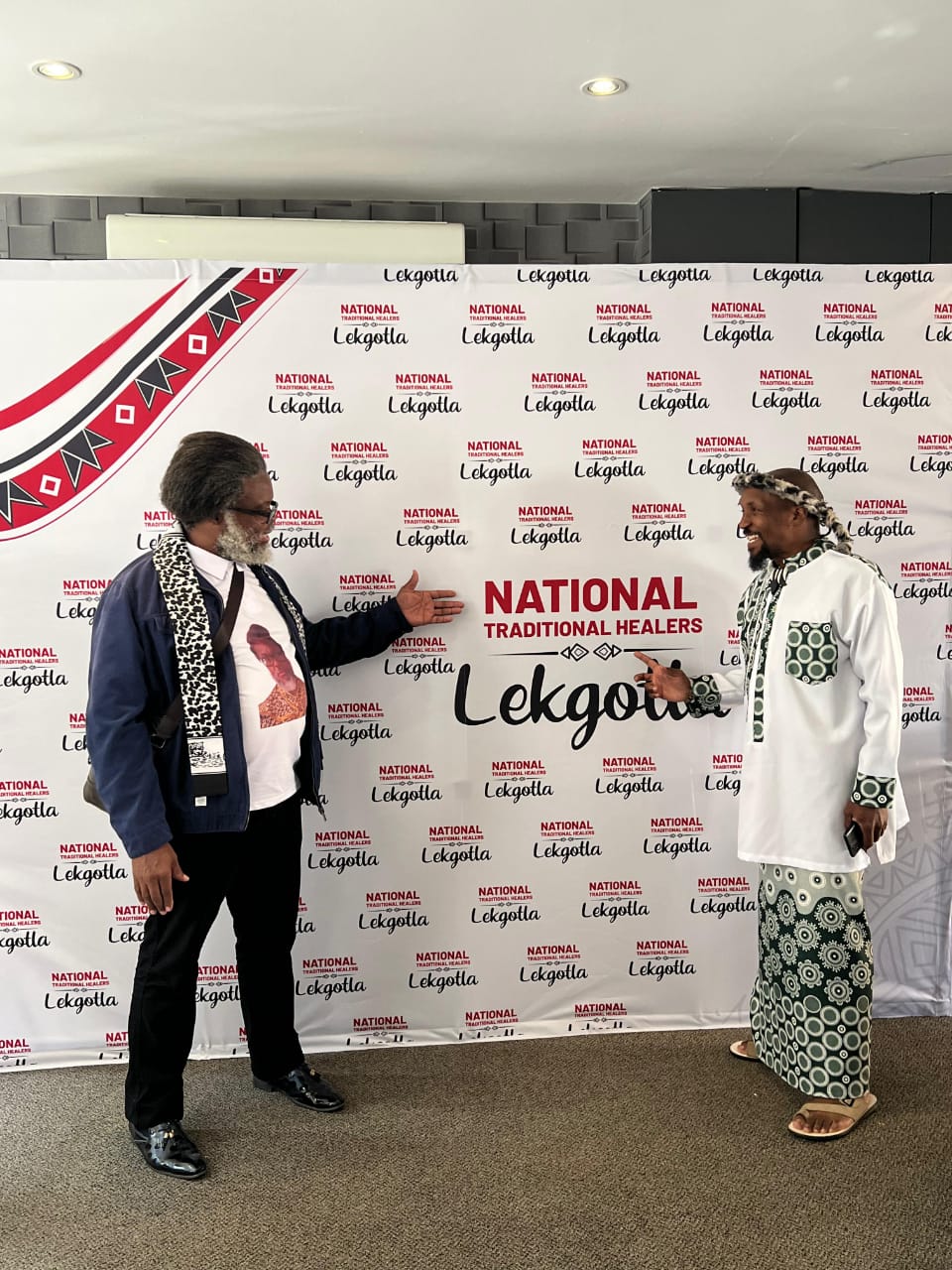

The recent National Traditional Healers Lekgotla, held from 3–5 June 2026 under the theme “From Voice to Action – Defining Our Future Together,” has generated significant discussion across the Traditional Health Practitioner (THP) sector.
Bringing together Traditional Health Practitioners, elders, knowledge holders, activists, community leaders and representatives from various formations across South Africa, the Lekgotla sought to create a national platform through which practitioners could engage on issues affecting the future of traditional healing, Indigenous Knowledge Systems (IKS), sector regulation, practitioner welfare, economic development, and collective representation.
According to the organisers, discussions focused on matters including the identity and definition of Traditional Health Practitioners, the future of Indigenous Knowledge Systems, ethical practice, economic challenges, sector regulation, government relations, and long-term institutional development.
The emergence of the Lekgotla raises important questions for the broader traditional health sector: What role should such a structure play? How does it relate to existing associations? Can it contribute meaningfully to sector unity? And what implications might it have for future legislative and policy developments?
A Platform, Not a Replacement
One of the most important clarifications emerging from the Lekgotla process is that its leadership has explicitly stated that the Lekgotla Labelaphi Bendabuko NPC is not intended to replace existing organisations or associations.
In a statement issued by the Board of Directors on 11 June 2026, the Lekgotla leadership emphasised:
“The Lekgotla Labelaphi Bendabuko NPC as formation does not in any way replace or displace the roles and functions of existing associations and organisations existing within our sector.”
The statement further explains that the Lekgotla seeks to function as a collective representation structure capable of addressing issues affecting all practitioners regardless of lineage, tradition, province, or organisational affiliation.
This distinction is significant.
The traditional health sector has historically consisted of numerous associations, councils, forums, traditional leadership structures, training initiatives and practitioner formations. While diversity is an inherent feature of Indigenous Health Knowledge Systems, fragmentation has often limited the sector’s ability to present coherent positions on matters affecting all practitioners.
THPASA’s Perspective: A Bargaining Council for Organised Traditional Health Practice
From the perspective of the Traditional Health Practice Association of Southern Africa (THPASA), the emergence of the Lekgotla presents both an opportunity and a responsibility.
THPASA does not view the Lekgotla as a replacement for associations, professional bodies, provincial structures, practitioner forums, or statutory institutions.
Rather, THPASA believes that the greatest value of the Lekgotla may lie in its potential to evolve into what could best be described as a sector-wide bargaining and coordinating platform for organised Traditional Health Practice.
Such a role would allow associations, organisations, traditional leaders, researchers, practitioners, and sector stakeholders to retain their individual identities and mandates while speaking collectively on matters affecting the profession as a whole.
If realised in this manner, the Lekgotla could become a forum where sector-wide consensus is developed on issues such as:
- Legislative reform;
- Responses to THP Act regulations;
- Protection of Indigenous Knowledge Systems;
- Economic empowerment of practitioners;
- Professional development and standards;
- Public policy engagement;
- National advocacy campaigns; and
- Relations with government and Parliament.
Importantly, this would not require organisations to surrender their independence. Instead, it would create a mechanism through which diverse voices can contribute to a shared national position when necessary.
Legislative Reform and the Private Member’s Bill
Among the most discussed outcomes of the Lekgotla has been the proposal to explore a Private Member’s Bill aimed at addressing long-standing concerns regarding the Traditional Health Practitioners Act.
Dr Leo Alberts-Vilakazi has explained that such a bill would follow the normal parliamentary process applicable to any Private Member’s Bill. This would involve drafting, public consultation, Portfolio Committee consideration, parliamentary debate, passage through both Houses of Parliament, and eventual Presidential assent should it be approved.
She further noted that meaningful consultation would be essential, including engagement with:
- Traditional healing organisations;
- Traditional leadership structures;
- The Interim Traditional Health Practitioners Council;
- Government departments;
- Health sector stakeholders; and
- Communities affected by the legislation.
The proposal has attracted considerable interest because it seeks to place Traditional Health Practitioners themselves at the centre of discussions regarding the future regulatory environment governing the profession.
Engagement with Parliament
Questions have also emerged regarding the involvement of political stakeholders in the Lekgotla process.
Responding to concerns raised by participants, Lekgotla Chairperson Dr Khumi Hamese explained that the involvement of representatives associated with the MK Party arose after correspondence was directed to Parliament’s Portfolio Committee on Health.
According to Dr Hamese, the party was the only political formation that responded to the sector’s concerns and subsequently indicated a willingness to assist from within the parliamentary process, including supporting discussions around a Private Member’s Bill.
This development highlights an important reality: meaningful legislative reform ultimately requires engagement with Parliament and political institutions regardless of which party occupies those spaces.
For the sector, the challenge remains ensuring that such engagements advance the interests of practitioners collectively rather than becoming aligned with partisan political agendas.
Voices Emerging from the Movement
Since the Lekgotla concluded, a number of recurring themes have emerged from participants and stakeholders.
Mhlekazi Bulelwa, who has become one of the prominent public voices associated with the initiative, recently reflected:
“We are in a movement that has one goal and that is to fight for a voice yabelaphi bendabuko. Forward is where we are going.”
This sentiment has been echoed by many practitioners who see the current moment as an opportunity to strengthen collective representation and restore dignity to traditional healing.
At the same time, practitioners have consistently emphasised the importance of accountability, transparency, ethical leadership, documented reporting, and democratic participation.
Several participants have called for written reports, stakeholder feedback sessions, governance clarity, and ongoing consultation with organisations and constituencies that were unable to attend the Lekgotla.
These calls reflect a growing understanding that sustainable unity requires transparent processes and accountable leadership.
Lessons for the Future
The broader lesson emerging from the Lekgotla may be that unity does not require uniformity.
Traditional Health Practitioners come from different traditions, lineages, provinces, languages, organisations and healing systems. These differences should not be viewed as obstacles but as part of the richness of Indigenous Health Knowledge Systems.
THPASA’s own constitutional and strategic framework recognises that institutional development requires collaboration across a broader ecosystem of stakeholders and that diversity within Indigenous healing traditions should be regarded as a source of strength rather than division.
The question facing the sector is therefore not whether organisations should exist independently.
They should.
The question is whether the sector can simultaneously build effective mechanisms for collective engagement on issues affecting all practitioners.
The Road Ahead
The Lekgotla Board of Directors has already identified several immediate priorities, including responses to proposed regulations, legislative reform initiatives, economic development work, provincial activations, and institutional development processes.
For THPASA, the success of the Lekgotla will ultimately depend on whether it remains faithful to the principles of inclusivity, accountability, transparency, consultation and sector-wide representation.
If it develops as a platform that unites rather than replaces, coordinates rather than controls, and amplifies rather than silences the diverse voices of Traditional Health Practitioners, it may become one of the most significant institutional developments in organised Traditional Health Practice in recent years.
As the sector continues its journey from voice to action, many practitioners will be watching closely—not merely to see what structures emerge, but to determine whether those structures genuinely advance the collective interests of Abelaphi Bendabuko and the Indigenous Health Knowledge Systems they are entrusted to protect.
THPASA Newsroom
“Building professional institutions. Protecting Indigenous Health Knowledge Systems. Advancing the collective voice of Traditional Health Practitioners.”